


Outstanding service
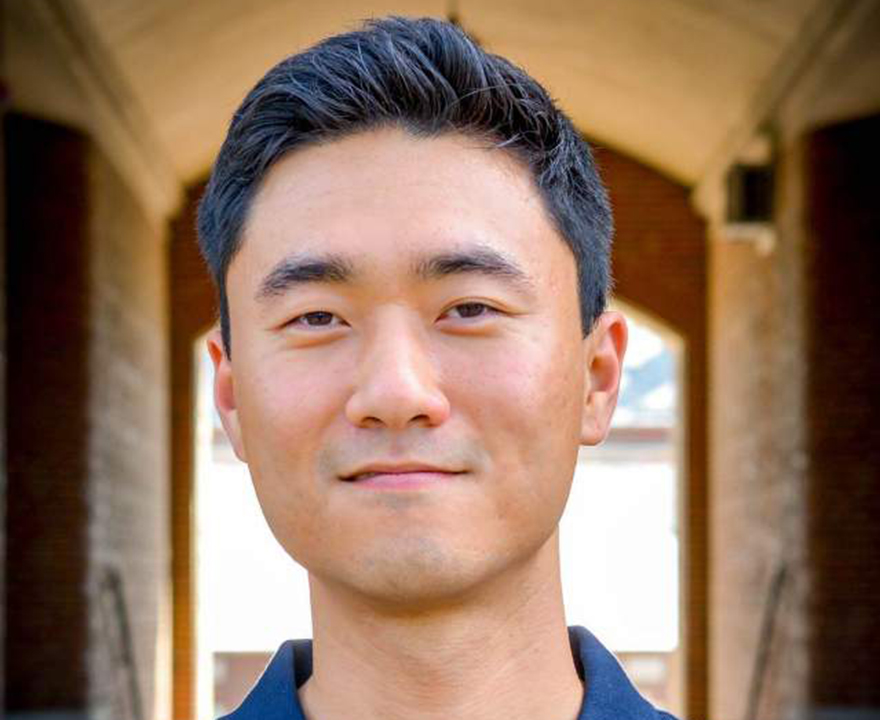
Juwon Lee, sixth-year anthropology Ph.D. student, has been named a co-recipient of the UC Irvine School of Social Sciences Outstanding Service Award. The faculty-nominated honor recognizes Lee’s contributions to the social science community, including the intellectual growth of others. “The Outstanding Service Award means a lot to me as I am dedicated to building a community of learning and support where scholars can engage intellectually with each other while grounded in humility and mutual respect,” he says.
Below, the grad student from Seoul, South Korea who earned his undergrad and master’s at The Ohio State University shares the activities that have filled his time as an Anteater, his research, and his post-grad plans.
Q: What drew you to study anthropology, and specifically at UCI? What interests you most about your work?
A: I decided to pursue anthropology after engaging with ethnographies during my master’s program. I was especially interested in feminist science and technology studies, environmental studies, and ethnographic research methods, which led me to apply for the anthropology program at UC Irvine. I specifically wanted to work with Dr. Eleana Kim, whose work has significantly contributed to the emergence of critical adoption studies and environmental studies of Korea. The hands-on experience and ethnographic research methods interest me most about my project because they allow me not only to examine connections and relations but also to investigate contradictions that don’t neatly fit within researchers’ theories.
Q: Tell us about your research. What problem will your findings help solve?
A: My current dissertation project examines the relations between urban stream development and ecological practices in Seoul, South Korea, to understand how the environmental discursive and material practices of urban life are historically, politically, and culturally informed by shifting meanings and values of nature. I am not necessarily looking to solve a problem, nor do I believe my project can, but I want to address the contradictory qualities of urban nature that sit uncomfortably with me. The polarizing sociopolitical discourse on environmental conservation and urban development has been addressed through the frameworks of sustainable development, ecological urbanism, and green cities over the past couple of decades. I want to explore the limits and possibilities of these frameworks as well as how people on the ground who practice nature every day navigate these global and state-level discourses in their neighborhoods.
Q: Tell us a bit more about the service activities you’ve been involved in while at UCI.
A: In addition to serving as a co-representative of DECADE and Access Asia during my early years at UCI, I co-organized weekly coworking hours and social book-reading events for anthropology graduate students. As a 2025-26 Graduate Fellow at the Center for Critical Korean Studies, I co-organized the center’s annual New Books Event with Dr. Josephy Jonghyun Jeon, as well as the Environmental Studies of Korea conference with Drs. Eleana Kim and David Fedman from UCI, and Dr. Albert Park from Claremont McKenna College.
Q: What organizations, foundations, or others have funded your research?
A: My research has been funded by the Core University Program for Korean Studies of the Ministry of Education of the Republic of Korea and the Korean Studies Promotion Service at the Academy of Korean Studies, the Lewis and Clark Fund Grant from the American Philosophical Society, and the School of Social Sciences and Department of Anthropology at UCI.
Q: What are some of your proudest accomplishments while at UCI?
A: Serving as the graduate fellow for the CCKS and co-organizing academic events and conferences has been one of the most intellectually stimulating and personally rewarding experiences so far. The Outstanding Service Award means a lot to me in this sense, as I am dedicated to building a community of learning and support where scholars can engage intellectually with each other while grounded in humility and mutual respect.
Q: Who have been your faculty mentors while here, and what impact have they had on your graduate career?
A: My advisor, Dr. Eleana Kim, has been an excellent mentor to me. I am deeply grateful for her commitment to mentorship, particularly because she prioritizes students’ own perspectives on the world and their projects over what she thinks they are. When I first entered the program, Dr. Kim ensured I had enough intellectual freedom to explore my own interests and curiosity, while also guiding me on how to focus on a research question. Even today, she remains curious and engaged with my project because she mentors students based on how they want to shape their projects, rather than imposing a set of guidelines. She has always been reassuring and supportive, even when I didn’t believe in myself and wanted to give up. Dr. Kim is a scholar with a sharp intellect, clear professional boundaries, and dedication to social and political commitments to imagining and practicing better worlds for everyone and all beings. She has been a role model for me in balancing these qualities, as I am now realizing more and more how challenging it can be.
My work is also deeply indebted to the tremendous mentorship and guidance of Drs. Valerie Olson, Mei Zhan, Kris Peterson, Keith Murphy, Joseph Jonghyun Jeon, and Laura Hyun Yi Kang, among other faculty mentors at UC Irvine.
Q: When do you plan to complete your Ph.D.? What are your plans thereafter? How has UCI prepared you well for this role?
A: I plan to complete my Ph.D. in the summer of 2027. I will start applying for postdoc positions and tenure-track jobs in academia this summer. Many years of teaching experience as a teaching assistant, developing research projects, securing conference travel grants, organizing academic and social events, and participating in writing workshops have all helped me prepare for the next step.