


Agreement on Connecticut redistricting? Court taps Columbia's Nathaniel Persily to oversee redrawing of state lines
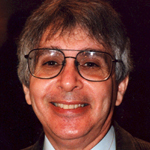
Agreement on Connecticut redistricting? Court taps Columbia's Nathaniel Persily to oversee redrawing of state lines
- December 31, 2011
- Bernard Grofman, political science professor and Center for the Study of Democracy director, is mentioned in the New Haven Register December 31, 2011
-----
From the New Haven Register:
The state Supreme Court has appointed Nathaniel Persily, a political science professor
at New York’s Columbia University, to be special master for redistricting, though
Republicans and Democrats continued Friday to disagree on how Persily will do his
job. The issue of redistricting landed on the Supreme Court’s desk after a legislative
committee tasked with redrawing district maps missed a Dec. 21 deadline. The court
then decided to appoint a special master, or legal scholar, to manage the process,
though the court requested that legislators offer their own suggestions on who that
special master should be and on the scope of duties. Attorneys representing both caucuses
spoke before the Supreme Court Friday, agreeing that Bernard Grofman, a political
science professor at the University of California, Irvine, and Persily, should be
considered for the position of special master, but disagreeing primarily on how a
special master would or would not use the present map, drawn in 2001.
For the full story, please visit http://www.nhregister.com/articles/2011/12/31/news/doc4efdf6eac158725833....
-----
Would you like to get more involved with the social sciences? Email us at communications@socsci.uci.edu to connect.
Related News Items
- Careet RightNew course opportunity: Civil Discourse
- Careet RightPolitical science professor brings fun, games to classroom
- Careet RightCosigner access reproduces existing social inequalities
- Careet RightVandekerckhove named UC Irvine Chancellor's Fellow
- Careet RightInflation anxiety looks very different than two years ago