


Maurer to address USAID on challenges for mobile money regulation in developing world

Maurer to address USAID on challenges for mobile money regulation in developing world
- July 21, 2011
- Listen in via webinar on July 25
-----
 With nearly 80 percent of the world’s population having access to mobile phone service,
the functions these powerful handheld devices serve are constantly evolving and can
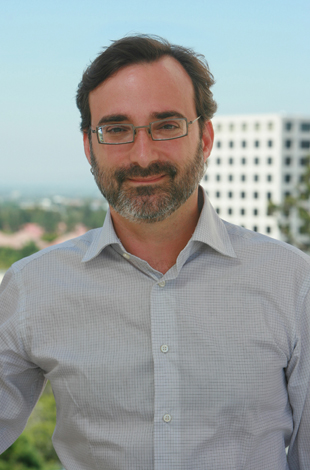
sometimes escape industry or regulatory attention, says Bill Maurer, anthropology professor and Institute for Money, Technology and Financial Inclusion director. On July 25, 2011, he will be the featured speaker at USAID’s Mobile Financial Services Seminar in Washington, D.C., an event that will bring
together non-profits, government regulatory agencies and entrepreneurs interested
in learning more about the developing mobile money industry. Focusing on his National
Science Foundation-funded research and the work of his institute, Maurer will discuss
the unexpected things people do with cash, coin and cell-phones, ranging from ceremonial
offerings to SIM-card swapping, various forms of cash pooling and airtime arbitrage.
His talk will also highlight some potential problems these uses pose for regulation
and consumer protection, as well as existing and proposed solutions.
With nearly 80 percent of the world’s population having access to mobile phone service,
the functions these powerful handheld devices serve are constantly evolving and can
sometimes escape industry or regulatory attention, says Bill Maurer, anthropology professor and Institute for Money, Technology and Financial Inclusion director. On July 25, 2011, he will be the featured speaker at USAID’s Mobile Financial Services Seminar in Washington, D.C., an event that will bring
together non-profits, government regulatory agencies and entrepreneurs interested
in learning more about the developing mobile money industry. Focusing on his National
Science Foundation-funded research and the work of his institute, Maurer will discuss
the unexpected things people do with cash, coin and cell-phones, ranging from ceremonial
offerings to SIM-card swapping, various forms of cash pooling and airtime arbitrage.
His talk will also highlight some potential problems these uses pose for regulation
and consumer protection, as well as existing and proposed solutions.
Tune in online via webinar to listen to Maurer’s talk live at 6:00 a.m. PST Monday, July 25 (requires advance registration).
Miss the live talk?
- Catch an interview with Bill online
- Check out Bill's mobile money regulation blogpost
- Watch the presentation in replay
-----
Would you like to get more involved with the social sciences? Email us at communications@socsci.uci.edu to connect.
Related News Items
- Careet RightWeatherall named fellow of the American Physical Society
- Careet RightLightening the mental load
- Careet RightFrom neurorobotics to Riot Games
- Careet RightAwards and accolades for Anteater sociologists
- Careet RightSome question whether a popular affordable housing policy is making the nation's home shortage worse