


Cosigner access reproduces existing social inequalities
Cosigner access reproduces existing social inequalities
- September 17, 2026
- UC Irvine-led study finds race shapes availability of key credit-building resource
-----
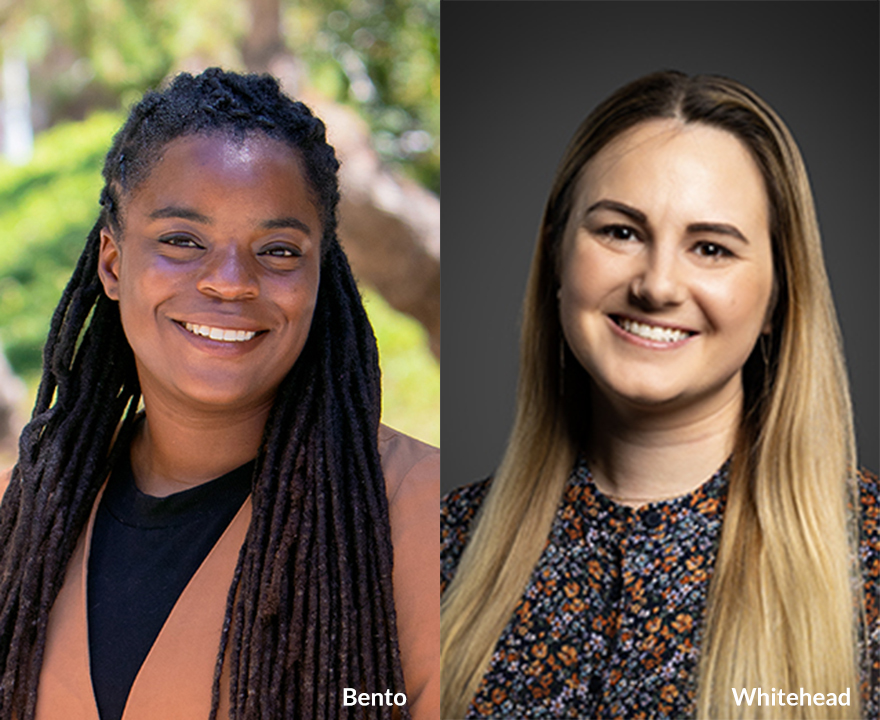
Access to credit is key to building wealth. For those with subprime or no credit history, cosigners can be a financial lifeline, opening opportunities for better lease terms, auto loans, mortgage rates and more. Yet access to a creditworthy cosigner is not evenly distributed, according to a new study led by UC Irvine sociologist Asia Bento. Focusing on mothers who are primary caregivers, Bento and coauthor Ellen Whitehead, Ball State University, find race to be a limiting factor in cosigner accessibility.
“We found that cosigner access is largely concentrated among white, economically advantaged and financially included mothers who receive other financial support,” Bento says. “As a result, cosigning may be an unequal resource that compounds existing social and economic advantages and sustains financial exclusion and inequality.”
Findings, published in Sociological Forum, are among the first to examine cosigner access by race.
The work draws from the year 15 follow-up wave of the Future of Families and Child Well-Being Study in which primary caregivers were asked about access to a potential cosigner for loan amounts of $1,000 and $5,000. Bento and Whitehead restricted their analyses to mothers, examining key characteristics of the more than 3,000 respondents, including race, ethnicity, relationship status, household size and age; socioeconomic status; and measures of financial inclusion and support, such as banking activities and asset accumulation.
Using regression analysis, they discovered that the typical mother with access to a cosigner was white, married and socioeconomically advantaged, with greater access to financial resources and support.
Overall, access to a cosigner was common but unequal for both loan amounts. On average, 70 percent and 55 percent of mothers had access to a cosigner for a $1,000 and $5,000 bank loan, respectively. However, access varied by race. For example, among mothers with access to a cosigner for a $5,000 loan, over half were white, whereas 23 percent were Latina and 16 percent were Black. Their findings bolster claims that credit is social, and that network inequalities may amplify uneven access to credit, Bento says.
“Ultimately, access to a cosigner signals increased access to financial tools that help protect and build wealth,” says Bento. “But the uneven distribution of access can make necessary goods and services easier and cheaper to access for some and not others, meaning a cosigner unlocks opportunities that may help reproduce existing inequalities.”
Further research on smaller-dollar loans and loan types, as well as changes in access over time , could provide a more complete picture of barriers to this important financial resource, the coauthors say.
“Looking ahead, we’ve begun to examine whether network instability widens disparities in access to a cosigner over time, which would help us understand how these inequalities are created and maintained,” Bento says.
For the full study, please visit Sociological Forum.
-Heather Ashbach, UC Irvine School of Social Sciences
-----
Would you like to get more involved with the social sciences? Email us at communications@socsci.uci.edu to connect.
Related News Items
- Careet RightSocial sciences research at risk
- Careet RightUCI sociologists earn American Sociological Association honors, leadership roles
- Careet RightStudy: Black-owned banks support protective credit markets, but are not a vehicle for equity
- Careet RightMultiple honors for UCI soc sci's Maricela Bañuelos
- Careet RightMeet Asia Bento, Assistant Professor and Dean's Fellow, Sociology