


Building a future in advocacy
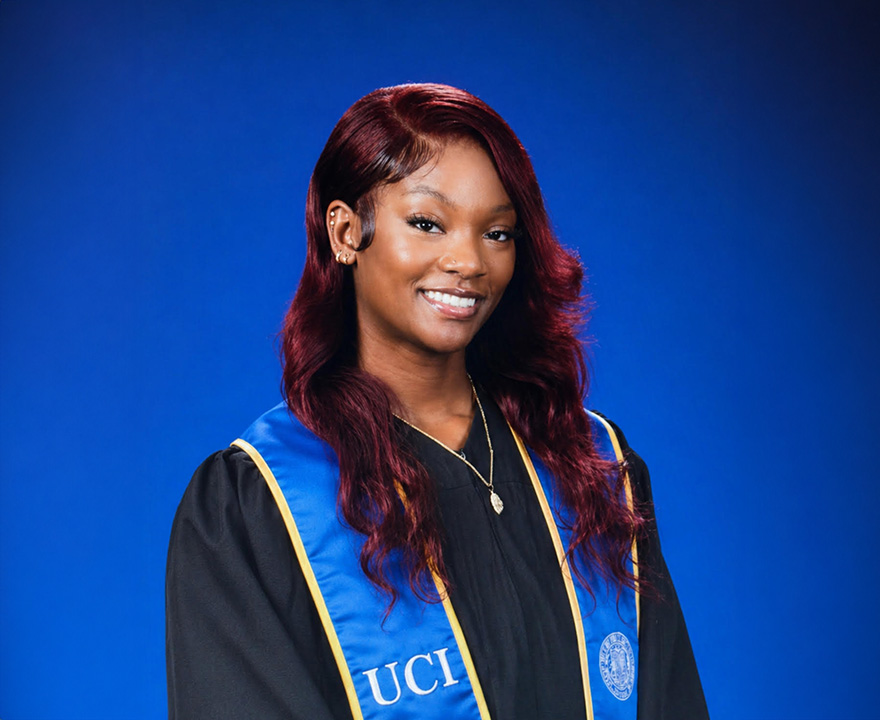
Jaylin Higgins ’26 sociology is passionate about correcting systemic inequalities and advocating for vulnerable populations. One day, she hopes to become a lawyer, focusing on family law and social justice so she can advocate for clients who are impacted by issues like financial instability, divorce and access to resources.
“Growing up, I saw how systemic inequalities and lack of support can deeply impact families and children, which inspired my passion for advocacy and social justice,” says Higgins.
Between completing courses for her major, honors research, internships, leadership roles and law school preparation, her busy schedule didn’t leave much room for pursuing a second major or minor to dive more deeply into underlying social issues shaped by policy decisions. Then, her sociology honors director, Emily Carian, assistant professor of teaching, introduced Higgins to the Certificate Program in Social Problems and Public Policy. The four-course series allowed her to pick from 25 available classes, effectively tailoring her course of study to her specific interests.
“This certificate allowed me to connect theoretical knowledge with real-world applications, especially in areas that impact marginalized communities,” says Higgins. “The courses I have taken have emphasized critical thinking and encouraged me to analyze social issues through a policy lens, which has strengthened my ability to evaluate solutions beyond surface level approaches. I’ve really appreciated how the curriculum connects sociological theory to current social problems, making the material feel relevant and applicable.”
That deeper connection between theory, policy and lived experience also helped Higgins see how the certificate could complement her broader academic and professional goals.
“This program allowed me to intentionally build expertise in policy-related topics while still tailoring my coursework to align with my specific interests, particularly in family law and social justice,” she says. “It’s provided a focused, interdisciplinary perspective on how social issues are addressed through policy, without the rigidity of a full major. In that way, it complements my degree rather than competing with it.”
And that’s exactly what the School of Social Sciences’ certificate programs were designed to do, says Jeanett Castellanos, social sciences associate dean of undergraduate studies and professor of teaching.
“The certificates are offered to complement majors and minors, to augment our students’ skill set, offering a wide range of cluster courses when time may be limited or a field interest is identified later in the educational journey,” she says.
Currently, the school offers 13 certificates ranging from a focus on American Sign Language, international immigration, labor studies, and social determinants of health to veterans studies, cultural competency, and business economics:
- American Sign Language (offered by Language Science)
- Business, Economy and Organizations (offered by Sociology)
- Chicano Latino Community in a Global Context (offered by Chicano/Latino Studies)
- Cultural Competency (offered by the Associate Dean’s Office)
- Diversity & Inequality (offered by Sociology)
- Global & International Sociology (offered by Sociology)
- History and Culture (offered by Chicano/Latino Studies)
- Labor Studies (offered by the Associate Dean’s Office with Social Ecology)
- Research on International Migration (offered by the Associate Dean’s Office)
- Social Determinants of Health in Latino Communities (offered by Chicano/Latino Studies)
- Social Policy and Issues (offered by Chicano/Latino Studies)
- Social Problems & Public Policy (offered by Sociology)
- Veterans Studies (offered by the Associate Dean’s Office)
Requirements for each certificate vary, but by and large, include completion of a three-to-four course series from a wide selection. For motivated students who are intentional about their selections, a certificate could effectively be completed within one quarter, Castellanos says. And many do; annually, hundreds of students pursue certificate courses across the school’s departments to deepen their knowledge in specific areas of study while expanding their career readiness and potential job opportunities upon graduation.
Recognizing the demand and need for these certificates in the evolving workforce, the Department of Chicano/Latino Studies is also offering, anticipated for summer 2027, a U.S. Latino Experience Cultural Competency Certificate via concurrent enrollment, available to non-matriculated students. Similarly, the school is currently offering summer and concurrent enrollment opportunities for the Veterans Studies Certificate, opening a pathway for students from other campuses and for professionals interested in building a particular skillset to work with this community. Both certificates recently launched aiming to reach local organizations and partners.
“At UCI, students love the option of taking a few courses to build their academic portfolio while earning a certificate. As many aim to be market ready and competitive for the next professional or academic pursuit, certificates are an added value to a degree,” Castellanos says.
For Higgins, the certificate in Social Problems and Public Policy, which she’ll proudly list on her resume alongside her sociology major and many other UCI accomplishments following her June commencement, has deepened her resolve and plans for a future in social justice advocacy and law.
“Overall, this certificate has reinforced my commitment to pursuing a career centered on advocacy and service,” she says. “It helped me better understand how policies shape people’s everyday lives and centered my career to committing and advocating for vulnerable communities. It not only expanded my academic knowledge but also strengthened my sense of purpose in working toward meaningful change within communities.”
-Heather Ashbach, UC Irvine School of Social Sciences