


The Weight of the White Coat: Latinos Navigating American Medicine
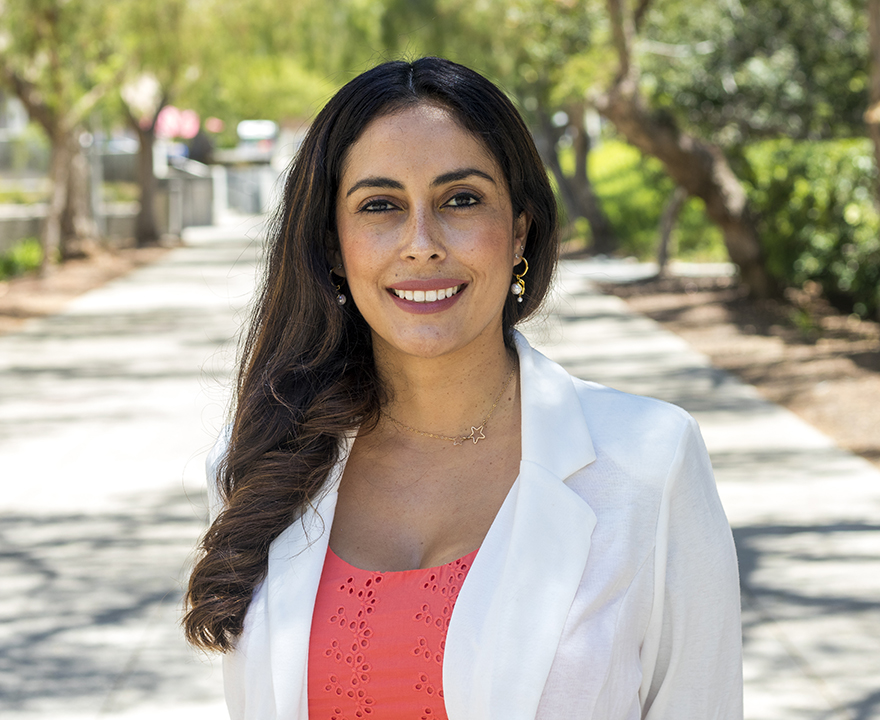
 In her new book, The Weight of the White Coat: Latinos Navigating American Medicine (UC Press), Glenda Flores, UC Irvine Chicano/Latino studies professor and department chair, sheds
light on the often overlooked experiences of Latina/o physicians, tracing traditional
and non-linear paths into medicine, hidden labor performed and structural barriers
encountered. Drawing on in-depth interviews and years of research, she details how
race, gender and policy shape who gets to wear the white coat, and at what cost. Below,
she expands on what this means for the future of healthcare and why this work matters
now more than ever.
In her new book, The Weight of the White Coat: Latinos Navigating American Medicine (UC Press), Glenda Flores, UC Irvine Chicano/Latino studies professor and department chair, sheds
light on the often overlooked experiences of Latina/o physicians, tracing traditional
and non-linear paths into medicine, hidden labor performed and structural barriers
encountered. Drawing on in-depth interviews and years of research, she details how
race, gender and policy shape who gets to wear the white coat, and at what cost. Below,
she expands on what this means for the future of healthcare and why this work matters
now more than ever.
Q: You open the book by examining why so little attention has been paid to Latina/o physicians in research and media. What inspired you to take on this topic, and why do you think now is the right time for this work?
A: I was inspired to write this book during my time as the Director of Undergraduate Studies in the Department of Chicano/Latino Studies at UCI a couple of years ago. In this role, I worked closely with first-generation college students—many of them biology majors—who dreamed of becoming doctors. Over and over, I saw students lose confidence after receiving just one unexpected grade. Some felt their medical careers were over before they even began. Time and time again, the message they received was that medical school was competitive, and that they would never get in if they did not perform exceptionally well all the time. Through the interviews with Latina/o physicians, I learned that for many, those setbacks didn’t always end their journey—they reshaped it. That’s the story that I wanted to capture-- how someone veers off the traditional track and gets back on course.
Now is the right time for this book because the healthcare system is changing. Physicians are increasingly choosing where to work based on state policies and the people they want to serve. For example, many doctors are leaving states like Utah due to restrictions on patient care. In California, I found that Latina/o physicians often leave smaller clinics or hospitals when they feel they can’t provide the quality of care their patients deserve and desire. These doctors—especially in family medicine—are the backbone of care in many underserved communities. When they leave, the consequences ripple outward to patients.
Q: Your book follows Latina/o physicians across various life stages—from early education to their experiences in medical practice. What were some of the most surprising or revealing patterns you uncovered in these trajectories?
A: The idea of the “leaky pipeline” is often used to describe how students—especially in STEM fields like medicine—drop off at critical stages before reaching their goals. But what the metaphor doesn’t capture is what it takes to stay in the pipeline, or what happens after someone reaches the end goal and becomes a doctor.
Latina/o physicians make up only about 6% of all doctors in the U.S., and most practice in California, Texas, or Florida. In my research, I focused on fully licensed physicians in California, the state with the highest share of active physicians. Most Latina/o doctors in California trained in U.S. medical schools, while a smaller number immigrated as highly-skilled doctors from Latin America.
One major insight: many followed non-traditional paths. Some had undergraduate degrees in fields like history, anthropology, public health, or Chicano/Latino Studies, not biology. Yet all met the rigorous pre-med requirements and became successful doctors. This challenges the myth that there’s only one “correct” route to medicine, as they experienced circuitous paths into the field.
Another striking pattern was the financial burden. We know that U.S.-trained doctors often carry six-figure debt and compare it to a mortgage. Meanwhile, international medical graduates (IMGs) from Latin America often paid more for immigration services than they did for medical school tuition. One Peruvian IMG told me their tuition was only $500 per semester for approximately seven years of schooling, but the cost of immigrating as a skilled worker to America was exponentially higher.
Q: You describe how gender and ethnicity act as “cumulative weights” in the white coat. Can you talk about how these dynamics shape professional opportunities—or obstacles—for the physicians you interviewed?
A: While gender parity has improved in medical school enrollment, it hasn’t fully translated into equitable outcomes, especially for Latinas. In my research, I found that only 1 out of 100 undergraduate Latinas who begin a biology major at a four-year public university ends up earning a medical degree. And even though women now make up more than half of medical students, Latinas account for just 2.4% of practicing physicians.
I found that bilingual Latina and Latino physicians often performed language interpretation for Spanish-speaking patients. This linguistic ability gave them access to meaningful shadowing experiences as premedical students. But, there were differences in how this labor was perceived as they moved up in the medical hierarchy. Male doctors were more likely to delegate Spanish/English interpretation labor without pushback, while women—especially those who could not pass as white—were often expected to take on this extra work themselves without additional support or resources.
This kind of “shadow labor” is rarely acknowledged, but it adds up. It reflects the unspoken assumption that bilingual, bicultural physicians should fill gaps in the system, simply because they can. These expectations weigh heavily, and they don’t fall equally, with bilingual Latinas performing the lion’s share of this work. The prestige of the white coat is real, but for Latina/o physicians, it also comes with racialized, gendered, and classed expectations that others don’t have to carry.
Q: What do you hope readers—especially those in medicine, education, or policy—take away from The Weight of the White Coat about the broader implications for inclusivity and representation in high-status professions?
A: I want readers to understand that for Latina/o doctors, the white coat carries more than professional authority—it carries a polyvalent weight. Sometimes that weight feels empowering: it brings respect, influence, and the ability to advocate for underserved communities. But it can also feel burdensome, shaped by systemic inequities tied to race, gender, immigration status, language, and skin tone.
Importantly, Latina/o physicians are not a monolith—they run the gamut from green eyes and blond hair to brown eyes and black hair. Their experiences vary widely depending on where they trained, their ethnic backgrounds, gender, skin tone, and how they are perceived in clinical spaces. What’s consistent, though, is that healthcare is becoming increasingly corporatized and less personal. If we want a healthcare system that works for everyone, we need to understand the full story of who wears the white coat—and why it matters.
-----
The Weight of the White Coat: Latinos Navigating American Medicine is available at UC Press. You can use code UCPSAVE30 for 30% off.