


Training the next generation of population science researchers

Training the next generation of population science researchers
- August 6, 2025
- Two-week NextGenPop residential program hosted at UC Irvine brings 17 students to campus for advanced instruction, career development and networking
-----
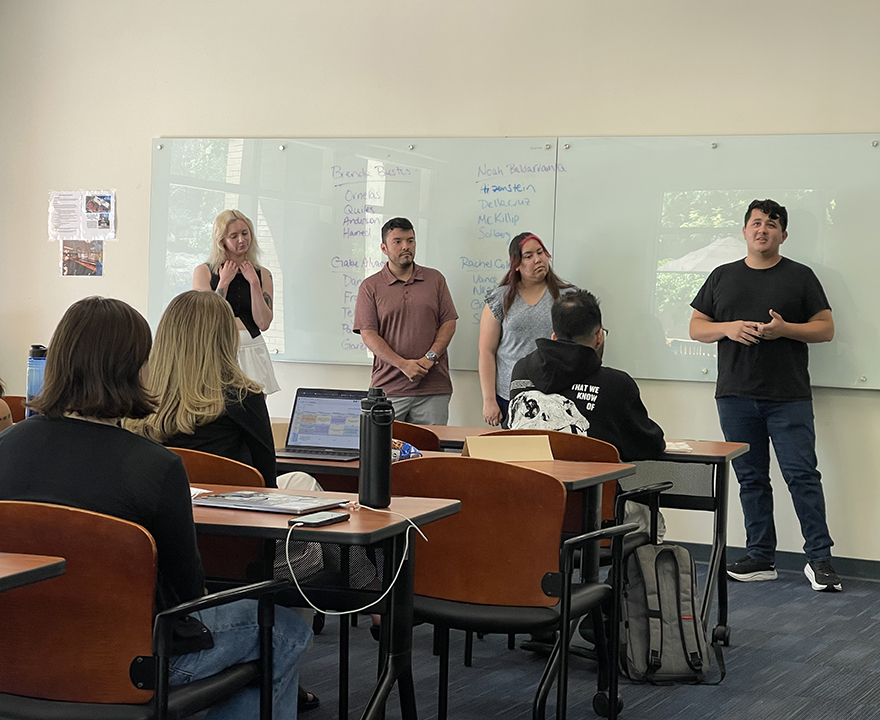 Training the next generation of population science researchers poised to improve human
health, development and well-being was the focus of a two-week residential program
held at UC Irvine this summer. As part of the on-going NextGenPop program, 17 students – from sophomores to recent bachelor’s degree recipients representing
14 universities across the nation – were selected as some of the most promising up-and-coming
researchers to participate in the intensive training session held June 23-July 3.
Training the next generation of population science researchers poised to improve human
health, development and well-being was the focus of a two-week residential program
held at UC Irvine this summer. As part of the on-going NextGenPop program, 17 students – from sophomores to recent bachelor’s degree recipients representing
14 universities across the nation – were selected as some of the most promising up-and-coming
researchers to participate in the intensive training session held June 23-July 3.
“The field of demography – and population research more broadly – is integral to our understanding of human development and how public policy and our social environments shape people’s lives,” says Amanda Geller, UC Irvine associate professor of criminology, law and society and affiliate researcher with the Center for Population, Inequality, and Policy (CPIP) which hosted the group. “It’s exciting to introduce the NextGenPop students to demographic concepts and methods at this early stage of their careers and provide them with both conceptual and methodological training that they can take into a variety of research domains and public service work.”
Over the course of their stay in Irvine, the students attended discussions, workshops and mentorship meetings with leading faculty and researchers from UCI, UCLA, Cornell, Loyola Marymount, Minnesota, Wisconsin, and RAND, all with a focus on using population health as a lens for studying population composition and change.
For program participant Luis Tejada, a senior sociology major at the University of North Carolina at Charlotte, the two-week session was an excellent introduction to – and precursor for – graduate school.
“I didn't have a lot of experience with population studies before NextGenPop, so it was really cool to have a formal introduction to the field,” he says. “I was able to learn a lot about demography and graduate school, while meeting wonderful professors and peers.”
The two-week curriculum covered a wide range of topics including demographic research methods; population dynamics related to crime, law, and inequality; family structure and change; mortality in prisons and jails; migration and immigrant health; child protective services; and public health policy and inequality. Designated time for lab work introduced student attendees to advanced statistical practices used when working with population datasets. Professional development sessions spotlighted graduate school application best practices while also providing space for networking activities and career discussions about potential pathways in academia, research institutes, and public service.
With research interests in educational inequalities, immigration and culture, Tejada plans to pursue a Ph.D. in sociology after graduation. “Because of this experience, I am now looking for graduate schools with population centers,” he says. “The opportunity to talk to professors from schools I am planning on applying to was also incredibly helpful for me. Similarly, talking to current graduate students gave me a lot of insight on graduate school and the application process.”
“Programs such as NextGenPop are crucial in providing rigorous training and professionalization opportunities for students who might not otherwise have the resources to gain experience in population sciences,” says Tim Bruckner, UC Irvine professor of health, society and behavior and CPIP co-director. “I fully expect that, in the future, these stellar trainees will be leaders in their respective research areas.”
Following the summer program and throughout the academic year, the students will participate in monthly virtual workshops on research and professional development. And in spring 2026, they will have the opportunity to present research, meet with population scholars, and reconnect with their cohort at the Annual Meeting of the Population Association of America to be held in St. Louis, Missouri, May 6-9.
The NextGenPop program is funded by a five-year grant from the Eunice Kennedy Shriver National Institute on Child Health and Human Development (#R25HD105602) and housed at the University of Wisconsin-Madison and Cornell University. Geller is the UC Irvine site principal investigator. Currently in its fourth year, NextGenPop draws expertise from and annually rotates between leading population science research universities to ensure regional access to students across the U.S. interested in advanced social science and demographic training. The inaugural summer program was held in 2022 at the University of Wisconsin-Madison, then moved on to Cornell University ('23), and Duke University (cohosted by Johns Hopkins University) ('24). Following this year’s conference at UC Irvine, the 2026 cohort will be hosted at the University of Minnesota. Program directors hope to continue building on the program’s success with a renewal grant to fund future cohorts.
To learn more about the program, visit https://nextgenpop.org/.
-Heather Ashbach, UC Irvine School of Social Sciences
-----
Would you like to get more involved with the social sciences? Email us at communications@socsci.uci.edu to connect.
Related News Items
- Careet RightMark your calendars for CPIP's 2026-27 seminar and workshop series
- Careet RightSocial sciences research at risk
- Careet RightNational Academies report identifies ways to reduce intergenerational poverty in US
- Careet RightResearchers from eight UCs converge on Irvine campus for deep dive on demography
- Careet RightFood insecurity, diabetes, and perceived diabetes self-management among Latinos in California: Differences by nativity and duration of residence