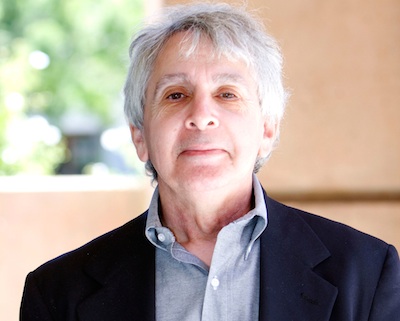
Bernard Grofman
Jack W. Peltason Endowed Chair
Distinguished Professor of Political Science and
Adjunct Professor of Economics
Former Director, Center for the Study of Democracy
University of California, Irvine
Department of Political Science
3151 Social Science Plaza
Irvine CA 92697-5100
bgrofman@uci.edu
Professor Grofman received his B.S. in Mathematics at the University of Chicago in 1966 and his Ph.D. in Political Science at the University of Chicago in 1972. He has been teaching at the University of California, Irvine since 1976 and a Full Professor since 1980, and the Jack W. Peltason Endowed Chair since 2008. He has been a Fellow at the Center for Advanced Study in the Behavioral Sciences, Stanford, visiting professor at the University of Michigan and at the University of Washington, and quest scholar at the Brookings Institution, and at New York University Law School. He has also been a visiting scholar at the University of Mannheim (Germany) at Kansai University, Osaka (Japan), at the University of Bologna (Italy), at the Berlin Science Center (Germany), at the Pompeu Fabra University, Barcelona (Spain), at the University of Paris, II (France) and at Nuffield College, Oxford University (England), and a short term scholar-in-residence at the University of Tilburg (Netherlands) and the University of Victoria (Canada), the University of Caen (France), the University of Konstanz(Germany), the Institute for Advanced Study (Vienna, Austria), and the Central European University (Budapest, Hungary). In 2017 he will be a short term scholar-in-residence at the University of Luneburg (Germany) and the Juan March Institute, Juan Carlos III University (Madrid, Spain). He received an Honorary Doctorate in Political Science from the University of Copenhagen (Denmark) in 2010. For the academic year 2012-13 he was a Research Fellow at the Straus Institute for the Advanced Study of Law and Justice at New York University Law School.
Representative
Books Published
Courses Taught Spring 2009
Public Choice
Courses Taught Winter 2008
US in Comparative Perspective
Courses Taught Winter, 2007
Advanced Quantitative Methods in Political Science I
Statistics for the Social Sciences Part II-Probabilitiy & Statistics
Courses Taught Spring 2009
Public Choice
Courses Taught Winter 2008
US in Comparative Perspective
Courses Taught Winter, 2007
Advanced Quantitative Methods in Political Science I
Statistics for the Social Sciences Part II-Probabilitiy & Statistics
MISCELLANEOUS PAPER
Pig and Proletariat: Animal Farm as History. 1978.
SOME UNPUBLISHED WORKING PAPERS
To view the following papers may require Adobe Acrobat. To download Adobe, click here.
RECENT AMICI BRIEFS
Jackson et al. v. Perry
et al. Amici Curiae (Gary King, Bernard Grofman, Andrew Gelman, and
Jonathan
Katz)
Vieth et al. v. Jubelirer et al. Amici Curiae (Bernard Grofman and Gary Jacobson)
Bartlett et al. v. Strickland et al. Amici Curiae (Nathaniel Persily and Bernard Grofman)
Vieth et al. v. Jubelirer et al. Amici Curiae (Bernard Grofman and Gary Jacobson)
Bartlett et al. v. Strickland et al. Amici Curiae (Nathaniel Persily and Bernard Grofman)
Avocations
Neat Stuff
| Link
to A Wuffle's Page (A Wuffle is a
long-time Assistant to Professor who has been recently promoted to Associate to Professor) |
 |
Links of Interest:
UCI homepage
UCI School of Social Sciences
Public Choice Society
UCI Institute for Mathematical Behavioral Science
UCI Center for the Study of Democracy
UCI Interdisciplinary Concentration in Public Choice